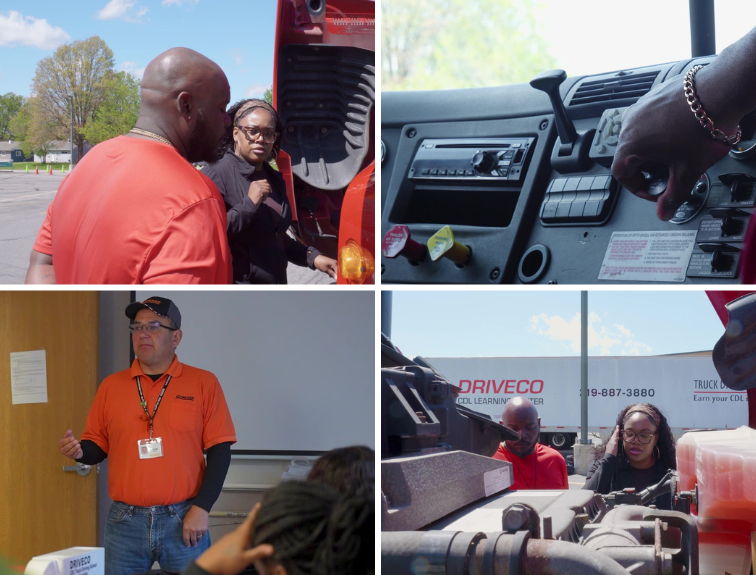

Once you complete your CDL training, then you will have to take the CDL you will have to take the actual CDL test. The CDL test will generally consist of two parts: the written test and the driving test. Once you pass these tests, then you will be allowed to begin the actual driving on the road.
The following would be steps to take when you are have finished your CDL training and are looking to get a job with a carrier once you get done getting your CDL:
Start Studying Ahead of Time:
Cramming for your CDL test a few days beforehand can make the experience even more stressful than it already is. However, if you begin to study while you are in CDL training and plan to put 30-60 minutes into studying each day, it will be a lot less of a stressful experience.
The week before taking a few practice tests online can help you finish preparing for the written part of the exam.
Understand the Fees You Will Have to Pay to Get Your CDL:
Beyond what you paid to go to school for your CDL training, you will be responsible for several other fees that you have to pay when you take your actual CDL test. The following are some of those fees that you should prepare to pay:
- $10 application fee (approximately) to get your learner’s permit for your CDL
- $40 (approximately) to take the CDL road portion of the test (paid every time you take it)
- $5 (approximately) to take the written portion of your CDL exam
- $75 to $100 (varies by state) for the actual CDL (must renew every 8 years in most states)
- $5 to $15 additional (varies by state) for each endorsement you get on your CDL
*fees vary by state these are approximate estimates of fees charged by most states – other fees not listed may apply
These fees will be required for you to complete your CDL training with a learner’s permit and then later to take and pass your CDL test, which is usually required for full-time employment by a carrier.
The Actual CDL Test:
The CDL test is divided into 2 separate parts:
The Written Part:
The written part of your CDL exam will consist of a total of 50 written questions. You will have a time limit of 60 minutes in which to answer these 50 questions. All questions are multiple-choice and have 4 options for each question given. The best way to prepare for the written part of your CDL exam is to take practice exams online to see if you successfully answer enough questions in time to pass the actual written test when you go to take it.
The Driving Part:
When taking the driving test, you will get given one of 3 versions of this test depending on the class CDL you wish to receive. The CDL test that you get given will be determined by whether you are going for your Class A, B, or C license. The road test in total will take about 2 hours and will include you two sections. One section is displaying knowledge both about how the vehicle operates (i.e., how to turn the car on as well as how to use things like emergency signals, turn signals, etc.). The other part will focus on how to maneuver and drive the vehicle as you will on the roadway.
Only once both portions of the CDL test are passed will you get your CDL and be allowed to begin driving for the truck carrier that hired you (if you were already hired on the condition that you got your license).
Complete Additional Training:
If you have any additional CDL training or coursework that is required after you will be required to complete that coursework before you can start driving with the carrier that you have gotten signed on to.
Company Orientation/Company Required Training:
Most companies will likely have an entire orientation program or extensive training that you will have to undergo before you go out on the road on your own as a truck driver. Each carrier is different in terms of how much training they require and how long you will have to go before you complete it. However, completing this training will be required before you start driving on your own.
Conclusions:
Preparing for your CDL and completing any training that is required to start taking your job on the road (literally) are the next steps to ensuring that you can obtain your CDL after you finish your education. If you would like to complete your CDL but would like more information on what exactly will be required, please feel free to contact us at the DriveCo CDL Learning Center. We will be happy to provide you with additional information and get you started on the path to a new career today.